Exploring the world of exterior painters, this article delves into the key skills and qualifications required for this role. From surface preparation to paint selection, discover the ins and outs of this crucial profession.
Overview of an Exterior Painter
An exterior painter is a skilled professional responsible for painting the outer surfaces of buildings, such as houses, commercial properties, and other structures. Their work involves applying paint, varnish, and other finishes to protect and beautify the exterior surfaces of a property.
Skills and Qualifications Required
- Knowledge of different painting techniques and materials
- Attention to detail and precision in work
- Physical stamina and ability to work at heights
- Ability to work independently or as part of a team
- Good color vision and sense of aesthetics
Typical Duties and Responsibilities
- Preparing exterior surfaces by cleaning, sanding, and priming
- Applying paint or other finishes using brushes, rollers, or sprayers
- Ensuring surfaces are smooth and free of imperfections
- Protecting surrounding areas from paint splatter and damage
- Inspecting completed work for quality and making any necessary touch-ups
Tools and Equipment Used
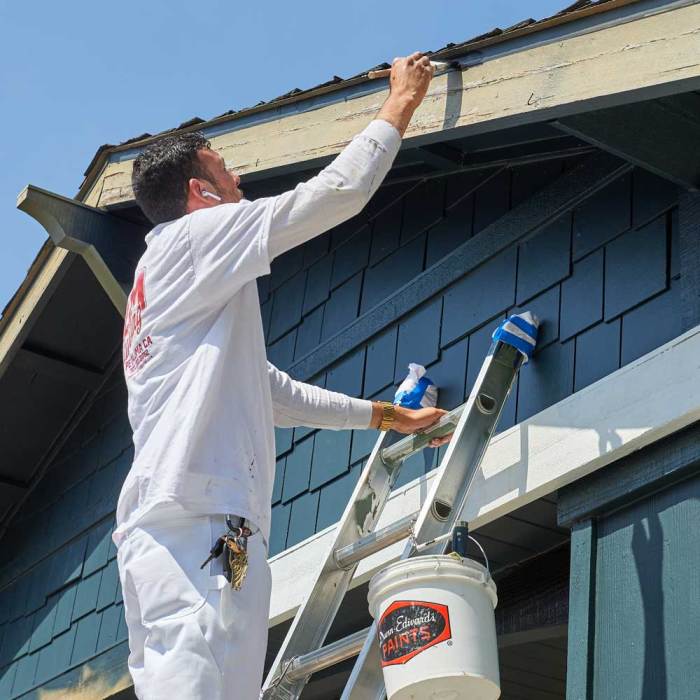
When it comes to painting the exterior of a building, an exterior painter relies on a variety of tools and equipment to get the job done efficiently and effectively. These tools are essential for achieving a professional finish and ensuring the longevity of the paint job.
Paintbrushes and Rollers
- Paintbrushes: Used for cutting in edges and corners with precision.
- Rollers: Ideal for covering larger surface areas quickly and evenly.
Paint Sprayer
- Paint Sprayer: Allows for a faster application of paint on large exterior surfaces.
Drop Cloths and Tape
- Drop Cloths: Protects the surrounding area from paint splatters and spills.
- Tape: Helps in creating clean lines and edges while painting.
Sandpaper and Scrapers
- Sandpaper: Used for smoothing surfaces and removing old paint or imperfections.
- Scrapers: Essential for scraping off loose paint before painting.
Extension Poles and Ladders
- Extension Poles: Allows painters to reach high areas without the need for a ladder.
- Ladders: Provides access to hard-to-reach areas for painting.
Buckets and Trays
- Buckets: Used for mixing paint and carrying it around the work area.
- Trays: Holds paint for easy access while using rollers.
Cleaning Supplies
- Brush Cleaner: Removes paint from brushes for reuse.
- Soap and Water: Cleans painting tools and equipment after use.
Proper maintenance of painting tools is crucial for their longevity and performance. Clean brushes and rollers after each use, store them properly, and replace any worn-out tools to ensure a smooth painting process.
Surface Preparation
Surface preparation is a crucial step in the exterior painting process as it ensures that the paint adheres properly and results in a long-lasting finish. Properly preparing the surface can also help prevent issues such as peeling, cracking, or bubbling of the paint.
Importance of Surface Preparation
- Ensures proper adhesion of paint
- Improves paint durability
- Prevents paint defects
Common Techniques for Surface Preparation
- Sanding:Smoothing out rough areas and creating a uniform surface for painting.
- Scraping:Removing old paint, dirt, and debris from the surface.
- Priming:Applying a primer to seal the surface and provide a good base for the paint.
Tips for Achieving a Smooth Surface
- Inspect the surface for any imperfections before starting.
- Fill in any cracks or holes with a suitable filler and sand smooth.
- Use high-quality sandpaper for sanding to avoid scratches on the surface.
- Clean the surface thoroughly to remove any dust or debris.
- Apply a coat of primer to improve paint adhesion and coverage.
Paint Selection and Application
Choosing the right type of paint for exterior surfaces is crucial to ensure durability and a professional finish. Different painting techniques such as brushing, rolling, and spraying can also impact the overall look of the paint job. Here are some tips on achieving a professional finish when applying paint:
Types of Paint for Exterior Surfaces
- Oil-based paints are known for their durability and adhesion, making them suitable for high-traffic areas.
- Acrylic paints are popular for their ease of use, quick drying time, and resistance to fading.
- Latex paints are environmentally friendly, easy to clean up, and offer good color retention.
Painting Techniques
- Brushing: Use high-quality brushes and apply paint in smooth, even strokes to avoid brush marks.
- Rolling: Use a high-quality roller and apply paint in a W or M shape to ensure even coverage.
- Spraying: Use a paint sprayer for large surface areas and ensure proper masking to avoid overspray.
Tips for Professional Finish
- Prepare the surface properly by cleaning, sanding, and priming before painting.
- Apply multiple thin coats of paint rather than one thick coat to prevent drips and uneven coverage.
- Work in small sections and maintain a wet edge to avoid visible seams between sections.
- Use high-quality paint and tools to ensure a smooth and long-lasting finish.
Safety Measures
Ensuring safety is paramount for exterior painters to prevent accidents or health hazards during painting projects. By following safety precautions and using proper personal protective equipment (PPE), painters can create a secure working environment.
Importance of Personal Protective Equipment (PPE)
- Wear goggles, gloves, masks, and protective clothing to shield against paint fumes, splashes, and skin irritation.
- Use a respirator when working with spray paints or in poorly ventilated areas to avoid inhaling harmful fumes.
- Protect your hands with gloves to prevent skin irritation or exposure to chemicals found in paint.
Tips for a Safe Working Environment
- Ensure proper ventilation in the work area to reduce paint fumes and maintain fresh air.
- Avoid painting in extreme weather conditions like high winds or rain to prevent accidents or paint quality issues.
- Keep work areas clean and organized to minimize tripping hazards and ensure a smooth workflow.
- Use sturdy ladders and scaffolding properly to prevent falls or injuries while working at heights.
Epilogue
In conclusion, the role of an exterior painter is multifaceted, requiring a blend of technical expertise and artistic flair. By following the tips and guidelines provided, you can ensure a successful painting project that leaves your exterior looking flawless.
Question & Answer Hub
What are the typical duties of an exterior painter?
Exterior painters are responsible for surface preparation, paint selection, and applying paint to external surfaces of buildings.
What tools are essential for an exterior painter?
Essential tools include brushes, rollers, scrapers, sanders, and sprayers.
How can I achieve a professional finish when painting exteriors?
Ensure proper surface preparation, use high-quality paint, and employ techniques like brushing and rolling meticulously.
What safety measures should exterior painters take?
Wear appropriate PPE, follow safety guidelines, and maintain a secure working environment to prevent accidents.